Photos to send for a veneer quote: the shots that actually help
A dentist can tell a lot from good photos, and very little from blurry selfies. Ten minutes with a phone and a window gets you a much more useful first opinion.
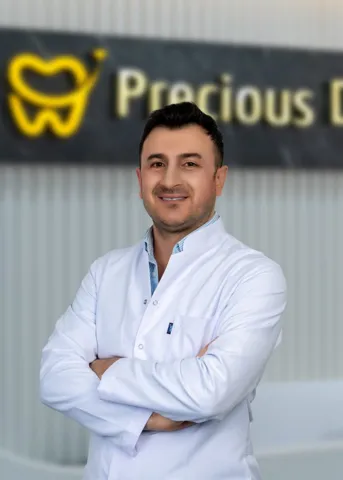 Medically reviewed by Dt. Hüseyin Yavuz Özbek, dentist (prosthetics and implant surgery) · Updated October 2026
Send six photos taken in daylight without flash: your full face smiling, a close-up of your smile, your teeth slightly apart, the left and right sides, and your top teeth from below with your head tipped back. Add a short video of you talking and laughing, any recent dental X-ray, a list of medicines, and a sentence about what bothers you. Photos give a first opinion; the plan is confirmed after an examination.
The first step with almost any clinic abroad is sending photos. What comes back, whether a thoughtful opinion or a generic "you need 20 crowns", depends partly on the clinic and partly on what you send. Good photos make it much easier for a dentist to see the real problem, and much harder for anyone to give you a one-size-fits-all answer.
Before you start
- Daylight. Stand facing a window, with the light on your face. Avoid direct midday sun, which causes harsh shadows.
- No flash. Flash flattens the shape of teeth and changes their colour.
- No lipstick, and plain clothes. Guidance on choosing tooth shades recommends removing lipstick and avoiding bright colours near the face, because they change how tooth colour looks.
- Clean teeth. Brush first so food or plaque does not look like stains.
- Back camera, not selfie camera. It is sharper. If you are alone, use a timer and a mirror, or the phone's voice shutter.
- No filters or beauty modes. Turn off anything that smooths or whitens.
- Hold the phone at mouth height, about an arm's length away, and zoom slightly rather than getting too close. Very close shots distort teeth.
The six photos
- 1. Full face, natural smileHead straight, looking at the camera, smiling as you normally would. This shows how your teeth relate to your face, lips and eyes.
- 2. Full face, big smileThe widest smile you make when you laugh. This shows how many teeth are visible, which decides how many might need treatment.
- 3. Close-up of your smileFrom the nose to the chin, natural smile. This shows shape, colour and gum line.
- 4. Teeth slightly apartLips pulled back gently with your fingers (or cheek retractors if you have them), teeth a few millimetres apart, so both top and bottom edges show.
- 5. Left and right sidesTurn your head to each side and smile. Side views show whether teeth are forward or set back, which matters for thin or no-prep veneers.
- 6. Upper teeth from belowTip your head back and photograph the biting edges of the upper teeth, ideally with a mirror. This shows wear, chips and fillings.
Add a short video
A 15 to 20 second video of you talking normally, counting from 50 to 60, and laughing is surprisingly useful. Teeth look different in motion. A video shows how much of the upper and lower teeth you show when speaking, whether your lips move evenly, and whether a gap or chip is visible in everyday life. Our article on veneers on lower teeth explains why the lower teeth matter.
Other things to include
- What bothers you, in a sentence or two. "My front teeth have got short and yellow" helps more than "I want a Hollywood smile".
- What you would like to keep. Some people like a small gap or a particular tooth shape.
- A recent X-ray if you have one. Your UK dentist can give you a copy; you have a right to request your records under data protection law.
- Your dental history. Root fillings, crowns, implants, gum treatment, grinding, braces.
- Your medicines and health conditions. A list is fine.
- Your timing. When you would like to travel, if you know.
If you have old crowns, implants or dentures
Take one extra close-up of any crowns, bridges or implant teeth in the front of your mouth, and mention them in your message. They cannot be whitened and may need replacing to match new veneers, which changes the plan and the price. If you wear a partial denture, take photos with it in and with it out. If you have had braces, say so, and mention whether you still wear a retainer.
Photos from an old smile
If your teeth have changed a lot, a photo of your smile from ten or twenty years ago can be helpful too. It shows how long your teeth used to be, how much of them showed and what shape suited your face. Dentists often use this as a guide when rebuilding worn teeth, because the aim is usually to look like a fresh version of yourself rather than like someone else. Send it as an extra, labelled with the year.
Shade: what photos can and cannot show
Phone cameras adjust colour automatically, so photos are not a reliable way to judge the exact shade of your teeth. They are good for showing shape, wear, gaps and gums. Shade is chosen in the clinic, in daylight, with shade tabs held against your teeth. If you have a shade in mind, describe it in words, for example "natural but brighter", and read veneer shades explained before you go.
Photos to avoid
- Filtered or "beautified" photos.
- Photos taken under a yellow ceiling light at night.
- Extreme close-ups from a few centimetres away.
- Old photos from a year or more ago.
- Only one front-on smile: it hides depth, wear and the sides.
Name your files clearly, such as "front smile" or "left side", and send them in their original size. Messaging apps can compress photos; sending them as documents keeps the detail.
What a good reply looks like
A useful reply from a clinic should be specific to your photos. Look for:
- comments on particular teeth, not just a number of veneers;
- a suggestion of veneer, crown, bonding, whitening or nothing for different teeth, with reasons;
- questions back to you, for example about grinding or old fillings;
- a clear statement that the plan will be confirmed after an examination and X-ray;
- prices that name the treatment and the material, not just "veneers".
A reply that offers the same package to everyone, pushes a deadline or avoids saying which teeth would be crowned is a reason to be careful. The NHS checklist for treatment abroad warns against a hard sell and pressure to decide quickly.
Your photos and your privacy
Photos of your face are personal data. A clinic should use them only to assess your teeth and should delete them if you ask. If you send photos to several clinics, keep a note of which ones you contacted so you can ask them to delete your details later. Our privacy policy explains how we handle them.
From photos to a plan
Photos are the start of the conversation, not the end. A dentist can usually say from photos whether you are likely to need veneers, bonding, whitening or crowns, roughly how many teeth are involved, and whether anything needs attention first, such as gum health. The examination and X-ray in the clinic confirm it. Our page on how it works shows the full process.
If the clinic asks for more photos, that is a good sign: it means someone is looking closely at your teeth.
A quick checklist
- Six photos in daylight, no flash, no filter.
- A short video talking and laughing.
- A sentence about what you want to change and what you want to keep.
- Dental history, medicines and any recent X-ray.
- Your rough travel dates.
At Precious Dental a dentist looks at the photos you send and replies with an opinion on each tooth, including when whitening, bonding or nothing is the honest answer. Send them on WhatsApp or through our contact form. Prices for every option are on our cost page.
Common questions
Can a dentist give a price from photos?
A good dentist can give a first opinion and an approximate plan from photos. The final plan and price are confirmed after an examination and X-ray.
Do I need someone to help me?
It helps. A second person can hold the phone at the right height and distance, but a mirror and a timer work too.
Should I use flash?
No. Flash flattens shape and makes teeth look whiter or bluer than they are. Use daylight from a window.
Do I need an X-ray before I contact a clinic?
It is not essential, but if you have had one recently at your dentist, ask for a copy. It shows old fillings, root fillings and bone that photos cannot.
Are my photos kept private?
They should only be used to assess your teeth. Ask the clinic how they store them and how to have them deleted.
Sources
- Alayed MA et al. (2021) Considerations in shade selection for dental restorations (lighting, lipstick, clothing). J Pharm Bioallied Sci
- NHS: treatment abroad checklist
- Oral Health Foundation: veneers
- ICO: your right of access to your personal data
Checked October 2026. Where we give our own view as a clinic, we say so.
Not sure what your teeth need?
Send us a few photos of your smile. A dentist looks at them and tells you plainly whether you need veneers, crowns, whitening, bonding, or nothing at all.