The try-in appointment: what to check before veneers are bonded
Once veneers are bonded, they are there to stay. The try-in is the moment you see the real veneers in your mouth and can still say "not quite". Here is how to use it well.
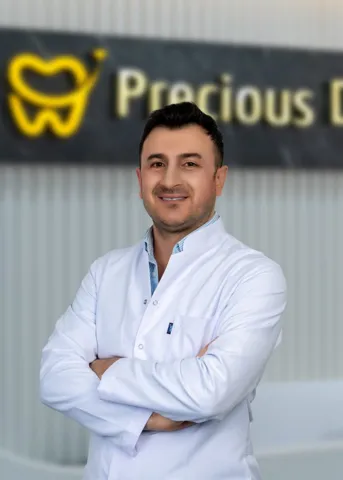 Medically reviewed by Dt. Hüseyin Yavuz Özbek, dentist (prosthetics and implant surgery) · Updated October 2026
At the try-in, the finished veneers are placed on your teeth with a water-based or try-in paste, without being bonded. You check shape, length, width, shade and how they look when you talk, ideally in daylight and from arm's length. If something is wrong, it can be adjusted or remade before bonding. Once you agree, the veneers are bonded and the bite is checked.
The Oral Health Foundation describes the fitting visit simply: the veneer "is carefully checked for fit and colour" and then bonded. That check is what dentists call the try-in. It is short, often 20 to 40 minutes before the bonding begins, and it is the most important appointment for you as a patient, because it is the last moment when changes are easy.
What happens
- Temporaries offThe temporary veneers are removed and the teeth gently cleaned.
- Veneers placed, not bondedThe finished veneers are seated on the teeth with water or a try-in paste. They stay in place while you sit still but are not fixed.
- The dentist checks the fitEdges at the gum, contacts between teeth and how each veneer sits.
- You lookWith a mirror, and ideally by a window and with a photo.
- Changes or approvalSmall adjustments are made, or a veneer goes back to the laboratory. When you are happy, bonding begins.
What to look at
| Check | How |
|---|---|
| Shade | In daylight, next to any natural teeth, compared with the whites of your eyes |
| Length | With lips relaxed, while talking, and in a big smile |
| Width | From the front at arm's length: do the teeth look square or crowded? |
| Thickness | From the side: are your lips pushed forward? |
| Edges | Is the line of the biting edges soft and natural, or perfectly straight? |
| Symmetry | Does the centre line of the teeth match the centre of your face? |
| Gum line | Do the veneers end neatly at the gum, without a visible step? |
Shade at the try-in
Colour is the hardest thing to judge and the hardest to change later. Guidance on shade selection recommends checking colour in natural daylight first, then under other lighting (Alayed et al., 2021). Ask to stand by a window. Look at your smile from a normal distance, not with your nose against the mirror. Take a photo on your own phone without flash.
The cement under a veneer also has a colour, and thin ceramic lets a little of it show. Try-in pastes come in shades that match the cements, so the dentist can show you the effect before choosing. In published cases of dark staining, dentists have chosen an opaque cement shade at the try-in to hide the tooth colour underneath (Faus-Matoses et al., 2017). For most people the effect is small, but it is worth asking about. See veneer shades explained.
Speaking and smiling
Veneers that look perfect while you sit still can look different in motion. During the try-in, talk normally, count from 50 to 60, say a sentence with lots of "f" and "s" sounds, and laugh. Watch how much tooth shows. If the try-in paste makes the veneers slip, ask the dentist to hold them while you speak, or check speech again after bonding when small edge adjustments are still possible.
How to speak up
Many people feel awkward saying they are not happy when a clinic has worked hard on their veneers. It helps to remember that a good dentist wants to hear it at this stage, because it is far easier to change than after bonding. Some useful phrases:
- "They look a bit long when I talk. Can we see them shorter?"
- "The colour looks whiter than I expected by the window."
- "This one looks wider than the others."
- "Can I have a few minutes and look again?"
Be specific, and say what you like as well. "I like the shape, but the colour is too bright" gives the dentist something to work with.
What can be changed, and how fast
| Change | Usually |
|---|---|
| Shortening an edge | Can be done in the clinic, at the try-in or after bonding |
| Softening corners, adding character | Often in the clinic or a quick laboratory adjustment |
| Making a veneer longer | Needs a remake |
| A different shade | Small shifts with cement; bigger changes need a remake |
| Making a veneer thinner | Limited; often a remake |
This is why it helps to have a spare day in your trip. A remake of one or two veneers can often be done in a day or two.
Bring a second pair of eyes
If someone is travelling with you, ask whether they can come into the room for the try-in. People who know your face notice quickly when something does not look like you. If you are alone, take photos and a short video and send them to someone at home while you wait.
After you approve
Once you say yes, the veneers are bonded one by one or in groups. After bonding, the dentist removes excess cement, checks the bite in every direction and polishes the edges. Our article on how veneers are bonded describes each step. Small changes to the edges are still possible after bonding, but the shade, thickness and overall size are now fixed.
If you have no try-in
Some clinics bond veneers without showing them to the patient first. That is a reason to ask questions before booking. The NHS treatment abroad checklist encourages you to ask what happens if you are not happy with the result. A try-in is the simplest answer to that question. Our clinic checklist lists it as one of the ten checks.
A note on expectations
Veneers are made by hand from photos, scans and the shade notes. They will be very close to the plan, and sometimes better, but small details may differ from the image in your head. Use the try-in to separate what really matters from what is just new. Teeth that look "big" in the first minutes often look right after a few minutes of talking, because you are used to seeing worn, short teeth. On the other hand, if something looks wrong from arm's length, in daylight, to you and to someone who knows you, trust that.
It also helps to remember what the try-in cannot show. Gums are often slightly red and puffy after the temporaries come off, and they settle over a few days. Lips can feel stretched after a long appointment. Judge the teeth themselves: shape, length, colour and how they sit in your smile.
If you need more time to decide
Sometimes the honest answer is "I'm not sure". That is allowed. Ask whether the veneers can be tried in again later the same day or the next morning, after you have walked around and looked at photos. Most clinics would rather wait a few hours than bond something you have doubts about. Use the time to compare your photos with the design you agreed, and to write down exactly what feels wrong. A clear note, such as "the two front teeth look longer than the plan", turns a vague worry into something the dentist and technician can fix.
Your try-in checklist
- Look in daylight, at arm's length, and in a photo without flash.
- Talk, laugh and say "f" and "s" sounds.
- Check from the side for thickness.
- Ask about the cement shade.
- Say what you like and what you would change.
- Do not agree until you are happy.
At Precious Dental you see your veneers in your mouth before they are bonded, and you can ask for changes. Our veneer packages include 6 or 7 hotel nights, so there is room for an adjustment if one is needed. See why Precious Dental and our prices.
Common questions
Can I ask for changes at the try-in?
Yes. That is the point of it. Small changes to shape and length can often be made in the clinic; colour changes may mean the laboratory remakes a veneer.
Will changes add time to my trip?
Small adjustments usually do not. A remake may need an extra day or two, so it helps to have a spare day in your schedule.
Should I bring someone to the try-in?
If you can, yes. A partner or friend who knows your face can tell quickly whether the new teeth look like you.
Does the cement change the colour?
It can slightly. Cement comes in shades, and try-in pastes let you see the effect before bonding.
What if I am not sure?
Ask for a few minutes, look again by a window, take a photo without flash and talk. If you are still unsure, say so before bonding.
Sources
- Oral Health Foundation: veneers (checked for fit and colour before bonding)
- Alayed MA et al. (2021) Considerations in shade selection for dental restorations. J Pharm Bioallied Sci
- Faus-Matoses V et al. (2017) Tetracycline discoloration restored with ceramic veneers (cement chosen from try-in). J Clin Exp Dent
- NHS: treatment abroad checklist
Checked October 2026. Where we give our own view as a clinic, we say so.
Not sure what your teeth need?
Send us a few photos of your smile. A dentist looks at them and tells you plainly whether you need veneers, crowns, whitening, bonding, or nothing at all.