What temporary veneers are like: the days in between
Between preparation and fitting, you wear temporary teeth for a few days while the laboratory makes your veneers. Here is what to expect, so nothing about them surprises you.
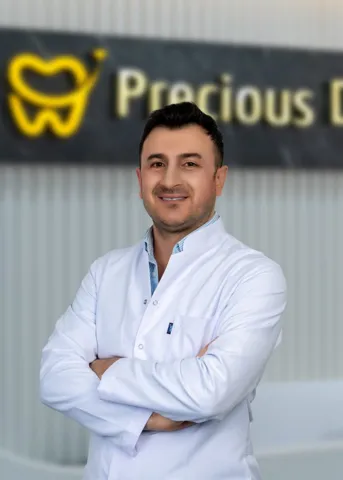 Medically reviewed by Dt. Hüseyin Yavuz Özbek, dentist (prosthetics and implant surgery) · Updated October 2026
Temporary veneers are usually made from tooth-coloured acrylic or composite, shaped to the planned design and lightly attached to the prepared teeth. They protect the teeth, keep them comfortable and let you see and test the new shape. They look reasonable but not as good as the finals, can feel thicker, may stain, and are weaker. Eat soft foods, avoid biting with the front teeth, clean gently and call the clinic if one comes loose.
The Oral Health Foundation describes veneers as usually needing more than one visit: one to prepare the teeth and take an impression, and another to fit the veneers once the laboratory has made them. On a trip abroad, those visits happen a few days apart. In between, you wear temporary veneers. They are an important part of the process, and also the part people are least prepared for.
Why temporaries are needed
- Protection. Preparation removes a thin layer of enamel. Near the gum, enamel is only around a third of a millimetre thick on upper front teeth (Pahlevan et al., 2014), so the inner dentine can be close to the surface. Temporaries cover it and reduce sensitivity.
- Appearance. You can go out, eat in restaurants and see Antalya without feeling self-conscious.
- Stability. They stop the teeth and gums shifting slightly while the veneers are made.
- A test drive. Because they copy the planned shape, they let you live with the new length and width for a few days. That is valuable information before the finals are made.
How they are made
Temporaries are usually made in the chair from tooth-coloured acrylic or composite, using a mould of the planned design. Often the front teeth are joined together as one piece, which makes them more stable. They are attached lightly so they can be removed easily at the fitting appointment without damaging the prepared teeth.
What they look and feel like
| Expect | Why |
|---|---|
| A reasonable but flatter look | Made quickly from simpler material, without the layering of the final ceramic |
| Slightly thicker feel | Temporary material needs some bulk to be strong enough |
| Joined teeth | Flossing between them may not be possible |
| A rough edge at the gum | Easy to smooth; tell the clinic if it irritates |
| Some sensitivity to cold | The prepared teeth are recovering |
| Slight change in speech | Your tongue is adjusting to a new shape |
Most people are pleasantly surprised by how normal temporaries look in a mirror. Few are surprised by how different the finals look once they arrive: the final ceramic has more translucency, more natural surface and a better fit at the gum.
Eating with temporaries
Temporaries are weaker than final veneers and are attached with a cement designed to let go. For the few days you wear them:
- Choose soft foods: pasta, rice, fish, eggs, soup, cooked vegetables, soft bread.
- Cut food into small pieces and chew with your back teeth.
- Avoid biting into apples, crusty bread, corn on the cob, nuts, hard sweets, toffee and chewing gum.
- Go easy on very hot and very cold food and drinks if your teeth are sensitive.
- Temporary material stains more easily than ceramic, so tea, coffee, red wine and turmeric may discolour it. It does not matter much, because they are coming off soon.
Antalya has plenty of soft, filling food: lentil soup, grilled fish, pilav, and meze such as hummus and yoghurt dips. A soft-food week is not a hardship.
Cleaning with temporaries
Keep brushing twice a day with a soft brush and fluoride toothpaste, as the NHS recommends for everyone, paying gentle attention to the gum line. If the temporaries are joined, floss cannot pass between them; brush along the gum line carefully instead, and rinse after meals. Do not pick at the edges. Clean gums now make the final fitting easier, because healthy gums bleed less when the temporaries come off.
Using them to judge the design
This is the most underrated benefit. While you wear the temporaries, notice:
- Do the teeth look too long or too short when you talk?
- Can you say "f", "v", "s" and "th" sounds clearly after a day or two?
- Do your lips close comfortably over them?
- Does the width suit your face, from the front and the side?
- Does anything catch when you bite or slide your jaw?
Write down anything you notice and tell the dentist before the finals are made, or at the latest at the try-in. Shape and length can still be adjusted at that stage. Colour is different: judge it at the try-in with the real ceramic, not on the temporaries. See the try-in appointment and avoiding bulky veneers.
Sleeping and drinking
You do not need to do anything special at night unless you know you grind; if you do, tell the dentist, because grinding can loosen or crack temporaries. Alcohol is fine in moderation, but red wine stains temporary material quickly, and a few drinks make it easier to forget and bite into something hard. Drink plenty of water, especially in the Antalya heat.
If a temporary comes off
- Keep itPut it in a clean container or a tissue. It can often be re-attached.
- Do not glue itHousehold glues are harmful to teeth and gums and make re-attaching harder.
- Message the clinicSend a photo. Most clinics see you the same or next day, because it is a quick fix.
- Protect the toothAvoid chewing on that side and very cold drinks until it is back on.
If you have severe pain, swelling or a high temperature, get urgent help. In Turkey the emergency number is 112, as GOV.UK notes in its travel advice.
Keep the clinic's address written down as well as on your phone, in case your battery runs out while you are out for the day.
How long you wear them
On a typical veneer trip, the temporaries go on the day of preparation and come off a few days later at the try-in or fitting. Our page on the veneers trip shows a typical schedule. If the laboratory needs to remake or adjust a veneer after the try-in, you may wear the temporaries a day longer. That is a good sign: it means the clinic is not accepting a result that is not right.
Composite veneers: no temporaries
If you are having composite bonding rather than porcelain, there is usually no temporary stage at all. The composite is built up directly on the teeth in one longer appointment. That is one reason composite trips are shorter. See composite veneers.
Using the free days well
Most veneer trips have two or three days in temporaries with no appointments. Plan gentle things: a walk in the old town of Kaleiçi, a boat trip from the harbour, time by the pool. Avoid anything where you might knock your mouth, and avoid long days in strong sun if your lips are sore. Keep the clinic's number in your phone. It is also a good time to look at your smile in different light and note anything you want to raise at the try-in.
A short checklist for the temporary days
- Soft foods, back teeth, small pieces.
- Brush gently twice a day; rinse after meals.
- Note how the shape feels and sounds; tell the dentist.
- Keep any loose temporary and call the clinic.
- Rest, see the city gently, and do not judge the final colour yet.
At Precious Dental temporaries go on the same day your teeth are prepared, so you are never without front teeth. If one comes loose, message us and we will see you quickly. A typical veneer package includes 6 or 7 hotel nights; see our packages and how it works.
Common questions
Will I be without teeth while the veneers are made?
No. Temporaries go on the same day the teeth are prepared, so you leave the clinic with teeth that look close to the planned shape.
Do temporary veneers hurt?
They should not. Some sensitivity to cold is common for a few days after preparation. Sharp or worsening pain is a reason to call the clinic.
Can I eat normally with temporaries?
Mostly soft foods. Avoid biting into hard or sticky foods with your front teeth, and cut food into small pieces.
What if a temporary comes off?
Keep it, avoid chewing on that side, and contact the clinic. It can usually be re-attached quickly. Do not glue it yourself.
Why do my temporaries look different from the design?
They are made quickly from simpler material. The final veneers are made by a technician in ceramic and look more natural. Use the temporaries to judge shape and length, not the final colour.
Sources
- Oral Health Foundation: veneers (prepared at one visit, fitted at another)
- Pahlevan A et al. (2014) Enamel thickness after preparation of tooth for porcelain laminate. J Dent (Tehran)
- NHS: how to keep your teeth clean
- GOV.UK: Turkey travel advice, health (emergency number 112)
Checked October 2026. Where we give our own view as a clinic, we say so.
Not sure what your teeth need?
Send us a few photos of your smile. A dentist looks at them and tells you plainly whether you need veneers, crowns, whitening, bonding, or nothing at all.